
What happened in America on 11 September 2001 changed the course of history.
The attack unfolded on New York’s skyline when two airliners flew into the World Trade Center.
Nearly 3,000 people lost their lives in a day that became known as 9/11.
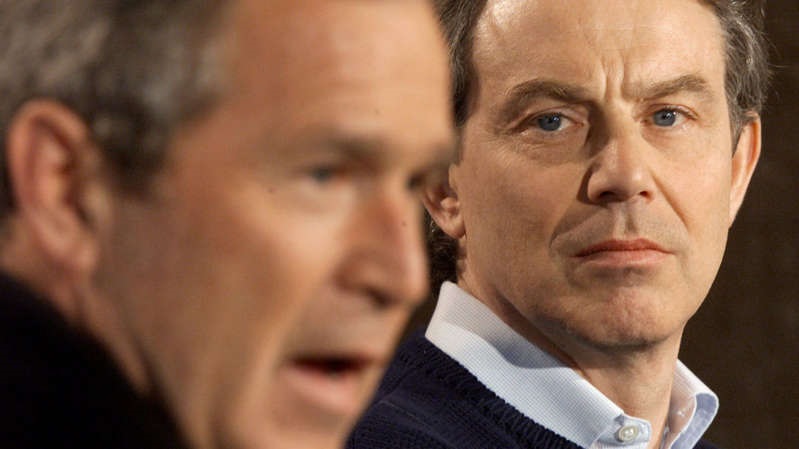
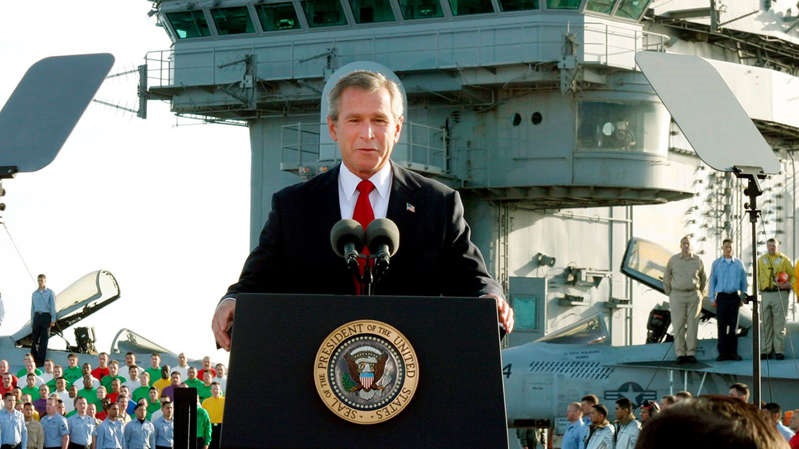
Then-president George W Bush declared the “War on Terror”.
Standing shoulder to shoulder with the UK’s great ally, Prime Minister Tony Blair gave Britain’s unflinching support to fight the new threat of international terrorism.
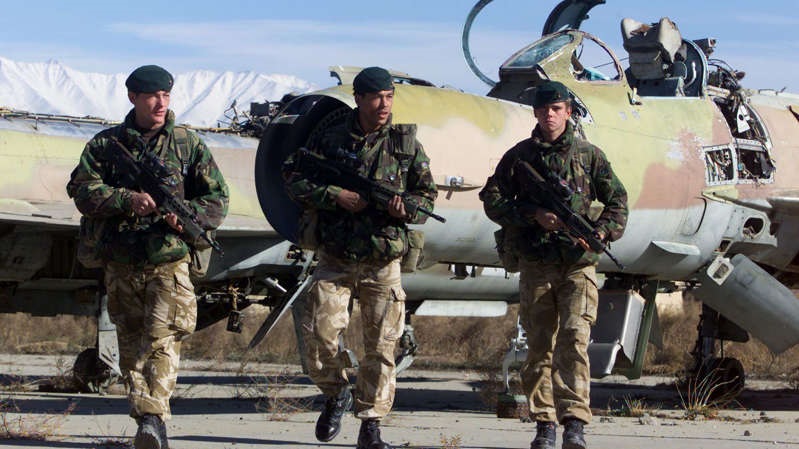
In 2001, America – supported by Britain – invaded Afghanistan to root out those responsible.
Then-president George W Bush declared the “War on Terror”.
Standing shoulder to shoulder with the UK’s great ally, Prime Minister Tony Blair gave Britain’s unflinching support to fight the new threat of international terrorism.
In 2001, America – supported by Britain – invaded Afghanistan to root out those responsible.
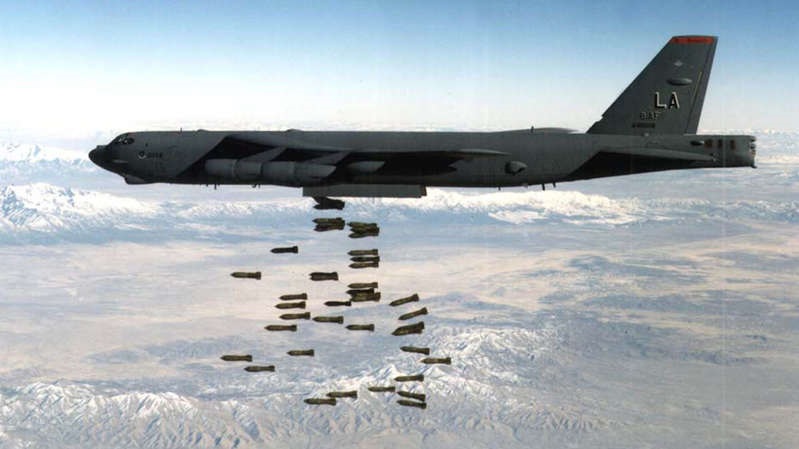
They toppled the Taliban government, who were protecting Osama Bin Laden and sought to rid the country of al Qaeda.
Bin Laden escaped to Pakistan, but by 2002 – after less than a year in the country – America declared Afghanistan free of al Qaeda.
But the strategic goalposts moved and President Bush called for the reconstruction of the country.
“It was never going to be a military solution in Afghanistan,” said Sir William Patey, the British Ambassador to Afghanistan from 2010 to 2012.
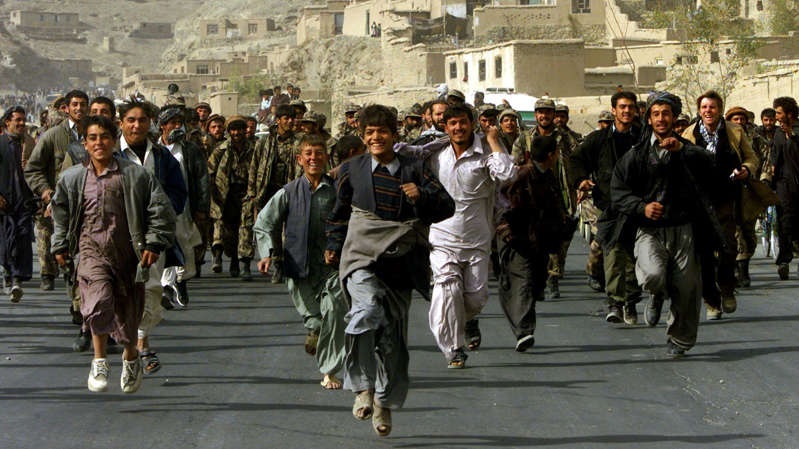
© Reuters Residents of Kabul celebrate and escort Northern Alliance fighters entering Kabul on 13 November 2001
“There was always going to have to be a political solution, so in many ways, the troops were let down by the politicians.”
He said troops “did what was asked of them” and “created the environment in which the Afghans had an opportunity to build a better country”.
By this point the Taliban was reorganising – their leader Mullah Omar launching an insurgency – and so followed years of bloody war.
By the time British troops deployed to Helmand Province in 2006, political attention and military efforts had been diverted to Iraq.
It was considered Afghanistan’s most dangerous region and the British Army found themselves exposed.
The Taliban were now using Improvised Explosive Devices, known as IEDs.
These homemade bombs were cheap to make and concealed in the ground in their thousands, making patrols deadly and dangerous.
As they grew in sophistication, they could take out entire vehicles and be detonated remotely.
Without enough air support, ballistic clothing and poorly armoured vehicles, British soldiers suffered catastrophic injury and loss of life.
Snatch Land Rovers become known as mobile coffins.
It was a Nimrod spy plane crash in 2006 that saw the single most fatalities – all 14 British service personnel onboard were killed.
A report later blamed senior military figures for sacrificing safety over saving money.
Lieutenant-Colonel Richard Williams, a former Commanding Officer of 22 SAS Regiment, said: “I think a lot of effort, courage, lives, limbs were expended for an outcome that is, in every way short of what we intended when people entered in 2001.
“It’s very hard to judge if any of our sacrifices today were worth it given that outcome.”
No one suffered more than Afghan civilians – more than 47,000 have died in the conflict since 2001.
Repatriation ceremonies to the UK raised awareness of the cost back home.
The public all too regularly lining the streets of Royal Wooten Basset to shed tears and pay their respects.
That Wiltshire town became synonymous with young dead soldiers.
Those Helmand towns where they fought – Sangin, Musa Qala, Lashkar Gah – became common parlance among parents who were waiting for their children to come home.
In total, 457 British personnel lost their lives in Afghanistan.
As the number of grieving families grew, support for the long war in Afghanistan began to wane.
British soldiers also came home with life-changing injuries – amputees in their hundreds.
But it wasn’t just the physical cost of war – 17% of those who had combat roles suffered symptoms of post-traumatic stress.
At its peak, 150,000 NATO troops were in Afghanistan.
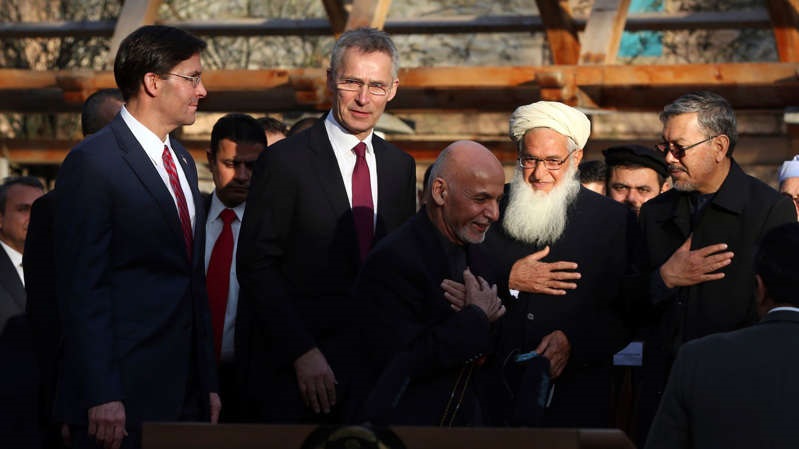
When coalition fighting ended in 2014, just 13,000 remained, supporting the Afghan National Security Forces to go it on their own.
As that support withdrew, after 20 years of war, lost lives and lost limbs, the Taliban took the country back in just 10 days.


Discussion about this post